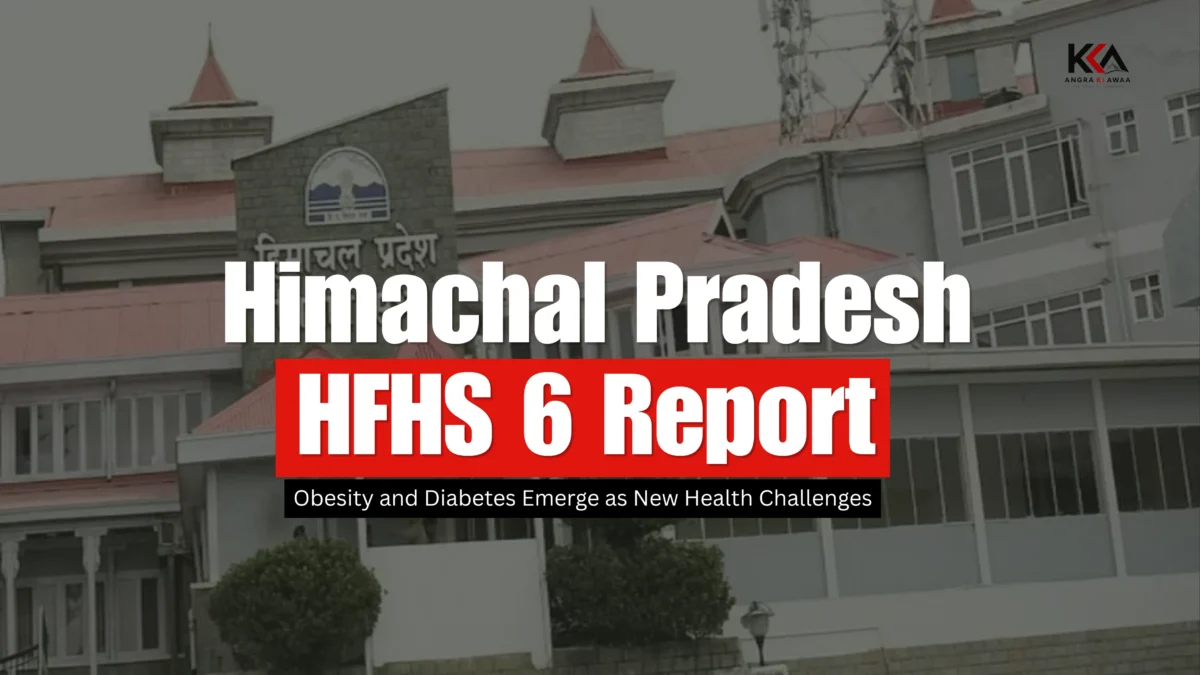
Shimla: Himachal Pradesh has registered significant progress across several key health and social indicators over the past five years, according to the latest National Family Health Survey (NFHS-6) 2023-24. The survey data show notable improvements in child nutrition, maternal healthcare, family planning, women’s empowerment and health insurance coverage. At the same time, the report highlights a growing burden of non-communicable diseases (NCDs), with rising levels of obesity, diabetes and hypertension emerging as major public health concerns for the hill state.
The findings indicate that Himachal Pradesh is successfully addressing many traditional health challenges but is increasingly confronting lifestyle-related diseases associated with an ageing population and changing dietary and behavioural patterns.
Sharp improvement in child nutrition indicators
One of the most significant achievements recorded in NFHS-6 is the substantial decline in child malnutrition. Stunting, which reflects chronic undernutrition and impaired growth among children under five years, declined from 30.8% in NFHS-5 (2019-21) to 20.6% in NFHS-6.
Similarly, the percentage of underweight children dropped from 25.5% to 16.4%, while wasting, an indicator of acute malnutrition, decreased from 17.4% to 10.4%. Severe wasting saw an even sharper decline, falling from 6.9% to 1.8%.
The improvements suggest that nutrition-focused interventions, expanded healthcare access and welfare schemes have had a positive impact on child health outcomes across the state. However, the survey also points to areas requiring attention. Exclusive breastfeeding among children under six months declined from 65.9% to 60.8%, indicating that infant feeding practices remain a challenge despite overall improvements in nutrition.
Also read: Why Are My Lips So Dry? Causes and Easy Remedies
Maternal healthcare indicators continue to improve
The NFHS-6 data show that Himachal Pradesh continues to perform strongly in maternal healthcare.
Institutional deliveries increased to 91.7%, up from 90% in NFHS-5, while 92.1% of births were attended by skilled health personnel. Nearly all pregnant women received antenatal care, with 99.2% reporting at least one antenatal care visit.
The quality of maternal healthcare services has also improved. The proportion of women receiving four or more antenatal care visits increased to 84%, while 84.2% of women had their first antenatal check-up during the first trimester of pregnancy.
Maternal nutrition indicators have shown marked progress as well. Consumption of Iron-Folic Acid (IFA) tablets for at least 100 days during pregnancy rose from 67.2% to 82.1%, while the percentage of women consuming IFA tablets for 180 days or more increased to 62.9%.
Postnatal care coverage also remained high, with 87.4% of mothers and 88.7% of newborns receiving postnatal care within two days of delivery.
Fertility rate falls further below replacement level
The survey reveals that fertility levels in Himachal Pradesh have continued to decline.
The state’s Total Fertility Rate (TFR) dropped from 1.9 children per woman in NFHS-5 to 1.6 in NFHS-6, significantly below the replacement-level fertility rate of 2.1. Urban areas recorded an even lower fertility rate of 1.1 children per woman.
The decline reflects greater adoption of family planning methods, increasing educational attainment among women and changing demographic patterns.
Modern contraceptive use increased from 63.4% to 66.3%, while the total unmet need for family planning fell from 7.9% to 6.3%. Female sterilisation continues to remain the dominant method of contraception, accounting for 50.2% of contraceptive use among married women.
Health insurance coverage registers massive expansion
Among the most dramatic changes recorded in the survey is the expansion of health insurance coverage.
Only 14% of households in Himachal Pradesh reported health insurance coverage in NFHS-5. In NFHS-6, that figure has increased more than fourfold to 61.4%.
Immunisation coverage remains strong
Child immunisation indicators remain among the strongest aspects of Himachal Pradesh’s healthcare performance.
According to the survey, 90.1% of children aged 12-23 months were fully vaccinated. Coverage levels remain high across major vaccines, including BCG, polio and measles.
Rotavirus vaccination, introduced in recent years to prevent severe diarrhoeal diseases among children, witnessed substantial uptake, reaching 91.2%.
Rising burden of obesity, diabetes and hypertension
While traditional health indicators have improved, NFHS-6 highlights an emerging challenge in the form of non-communicable diseases.
The proportion of overweight or obese women aged 15-49 years increased from 30.4% in NFHS-5 to 38.2% in NFHS-6. Among men, the figure reached 31.4%.
The prevalence of elevated blood sugar levels also increased significantly. High or very high blood sugar was reported among 20.6% of women and 20% of men.
Hypertension has emerged as another major concern. Elevated blood pressure was found among 24.4% of women and 31.7% of men.
Public health experts describe these trends as evidence of an epidemiological transition, where improvements in income, urbanisation, changing diets, sedentary lifestyles and population ageing contribute to higher rates of chronic diseases.
Women’s empowerment indicators show continued progress
The survey records substantial gains in women’s social and financial empowerment.
As many as 92.3% of currently married women reported participation in three major household decisions, reflecting high levels of agency within families.
Financial inclusion among women has improved significantly. The percentage of women owning and operating a bank or savings account rose from 83.1% to 93%.
Mobile phone ownership among women increased to 84.3%, enhancing access to information, digital services and financial resources.
The use of hygienic methods of menstrual protection among women aged 15-24 years also reached an impressive 94.9%, reflecting improvements in awareness and accessibility.
Decline in gender-based violence
One of the most encouraging findings relates to gender-based violence.
The percentage of ever-married women who reported experiencing spousal violence declined from 8.6% in NFHS-5 to 4.3% in NFHS-6.
The decline places Himachal Pradesh among the better-performing states on indicators related to women’s safety and wellbeing.
Ageing population signals future healthcare needs
The demographic profile of Himachal Pradesh is also changing.
The share of the population below 15 years declined from 21.8% to 20.9%, while the proportion of people aged 60 years and above increased to 16.4%.
The ageing population is likely to place additional pressure on healthcare systems, particularly in relation to chronic disease management, geriatric care and long-term healthcare services.
Experts believe that strengthening healthcare infrastructure for senior citizens will become increasingly important over the coming decade.
Tobacco and alcohol consumption remain concerns
The survey shows that tobacco use remains relatively high among men, with 32.2% reporting tobacco consumption. Alcohol use among men stands at 30.2%.
Female tobacco and alcohol consumption remain comparatively low at 1.9% and 0.6%, respectively.
Public health specialists continue to advocate targeted awareness campaigns to reduce tobacco and alcohol-related health risks, particularly among men.
NFHS-6 signals new public health priorities for Himachal Pradesh
The NFHS-6 findings present a largely positive picture of Himachal Pradesh’s health and social development trajectory. Significant improvements in child nutrition, maternal healthcare, immunisation, family planning and women’s empowerment demonstrate the effectiveness of sustained public health interventions and welfare programmes.
However, the rapid rise in obesity, diabetes and hypertension suggests that the state’s healthcare priorities are evolving. As Himachal Pradesh moves beyond many traditional health challenges, attention is increasingly shifting toward preventing and managing non-communicable diseases.
For policymakers, NFHS-6 offers both a success story and a warning. The state has made remarkable progress in improving health outcomes, but sustaining these gains will require addressing the growing burden of lifestyle diseases that now pose one of the most significant threats to public health in Himachal Pradesh.