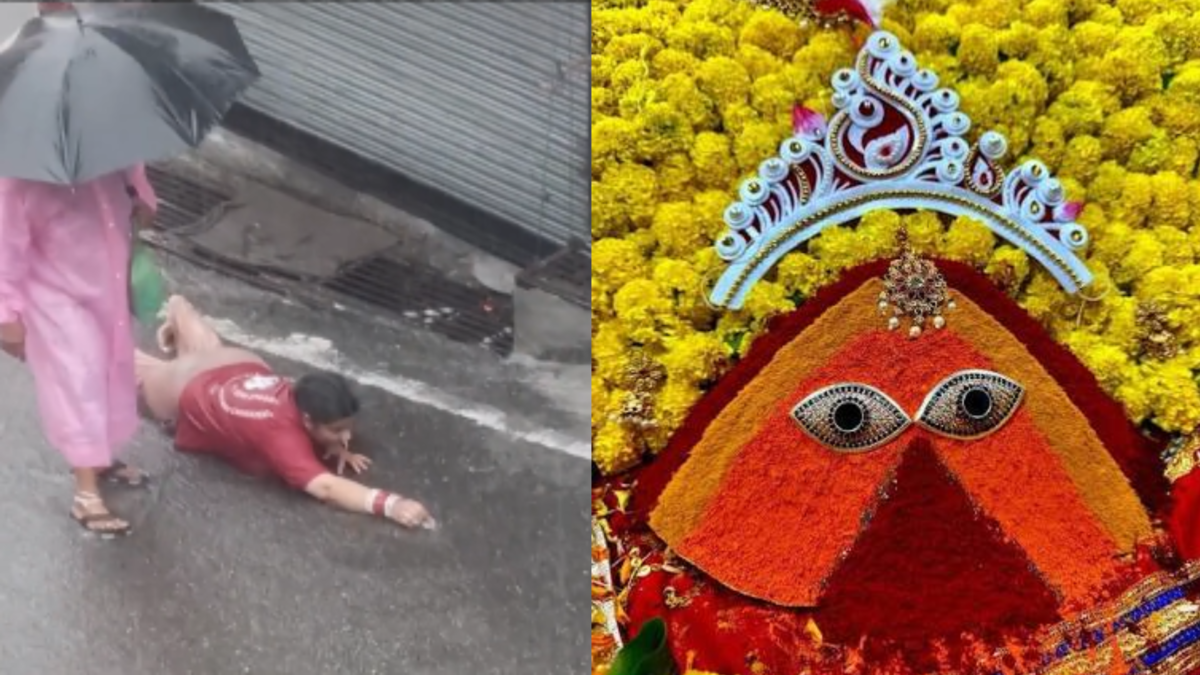
Kangra: A woman inspired thousands after she completed a challenging dandvat yatra to the revered Chintpurni Temple despite heavy monsoon rain. Videos shared widely on social media show her performing full-body prostrations along the rain-soaked route before reaching the temple to offer prayers to Maa Chintpurni. Her unwavering devotion has earned widespread praise, with devotees calling her journey a remarkable example of faith and determination.
The viral videos have also sparked fresh interest in the history and significance of Chintpurni Temple, one of India’s most revered Shakti Peethas. Every year, lakhs of pilgrims visit the shrine to seek the blessings of Maa Chintpurni, believing the Goddess removes worries and fulfils sincere wishes.
Chintpurni Temple: One of India’s Most Revered Shakti Peethas
Located in Himachal Pradesh’s Una district, about 40 kilometres from Una town near the Punjab border, Chintpurni Temple is one of the 51 sacred Shakti Peethas in Hinduism. The temple is dedicated to Maa Chintpurni, also worshipped as Maa Chinnamastika Devi, and welcomes lakhs of devotees every year, especially during Navratri and the annual Mata Da Mela.
Devotees worship the Goddess in the form of a sacred pindi instead of an idol. They believe Maa Chintpurni removes worries, fulfils wishes and blesses devotees with peace, prosperity and happiness. The name “Chintpurni” reflects this belief—’Chint’ means worry, while ‘Purni’ means the one who removes or fulfils them.
Also read: Famous Himachali Dishes: Traditional Foods from Himachal Pradesh Beyond Siddu
Why Is Chintpurni Temple a Shakti Peeth?
Hindu mythology connects Chintpurni Temple with the story of Goddess Sati and the Daksha Yagna. After Sati sacrificed herself following an insult to Lord Shiva, he carried her body across the universe while performing the cosmic Tandava. To restore balance, Lord Vishnu used the Sudarshana Chakra to dismember Sati’s body. The places where her body parts fell became the sacred Shakti Peethas.
Different traditions associate Chintpurni with Sati’s feet, forehead or consciousness. Regardless of these variations, devotees regard the temple as one of the holiest centres of Shakti worship and a powerful symbol of the divine feminine.
The Legend of Pandit Mai Das
Local tradition traces the origin of Chintpurni Temple to Pandit Mai Das, a Brahmin from the Patiala region. While travelling to his in-laws’ village, he stopped to rest beneath a tree in the area then known as Chhaproh.
During his rest, a young girl appeared in his dream and asked him to remain there and worship her. On his return journey, Mai Das meditated at the same place, where Goddess Durga appeared before him in her Chinnamastika form riding a lion. She instructed him to establish her shrine there.
Mai Das built the temple around the sacred pindi, and the place gradually came to be known as Chintpurni. Even today, his descendants continue to serve as priests at the temple.
What Are Shakti Peethas?
Shakti Peethas are among the holiest pilgrimage sites dedicated to the Divine Mother in Hinduism. According to tradition, there are 51 major Shakti Peethas marking the places where different parts of Goddess Sati’s body fell after the Daksha Yagna.
These sacred shrines represent the divine feminine energy and attract millions of devotees seeking blessings, protection, strength, prosperity and the fulfilment of wishes.
Famous Shakti Peethas in Himachal Pradesh
Himachal Pradesh, popularly known as Devbhoomi or the Land of the Gods, is home to several important Shakti Peethas.
- Chintpurni Temple – Dedicated to Maa Chintpurni, the Goddess believed to remove worries.
- Jwalamukhi Temple – Famous for its eternal natural flames.
- Naina Devi Temple – A major hilltop pilgrimage shrine.
- Bajreshwari Devi Temple – One of the oldest and most revered temples in the state.
- Chamunda Devi Temple – A prominent temple dedicated to the fierce form of the Goddess.
Many devotees undertake the Himachal Shakti Peeth Yatra, visiting these temples in a single pilgrimage.
Today, Chintpurni Temple remains one of North India’s most visited pilgrimage destinations. Its ancient traditions, spiritual legacy and deep-rooted mythology continue to attract millions of devotees from across India every year.