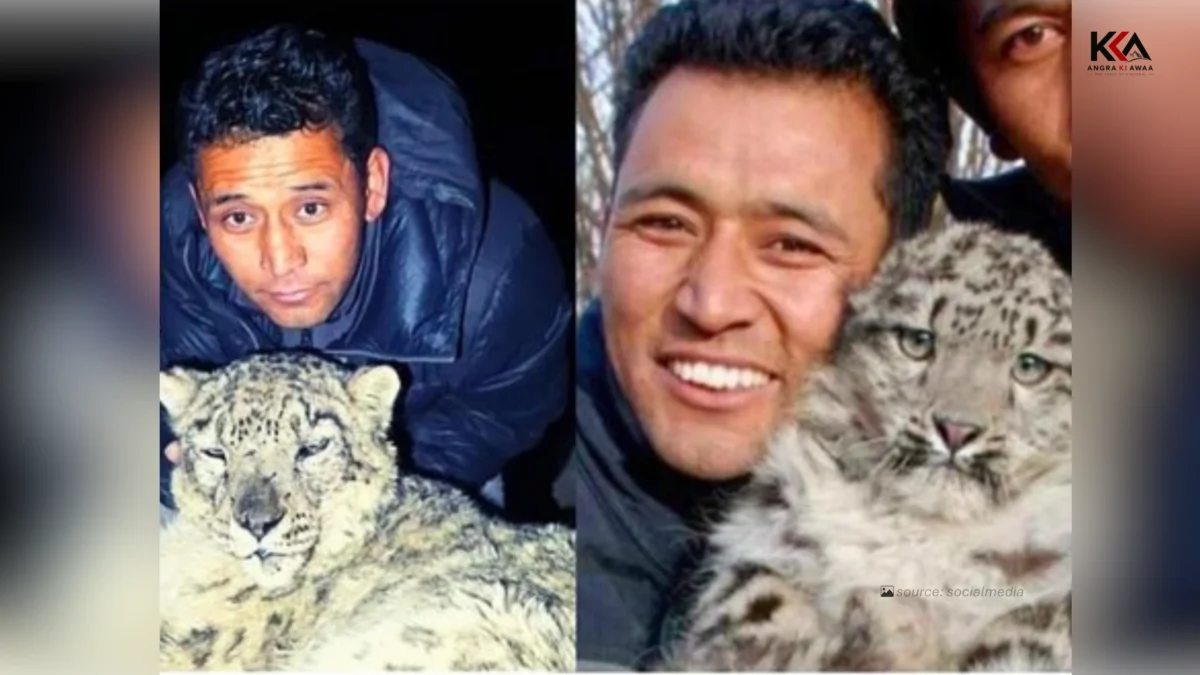
There are many conservationists you have come across but only few like Khenrab Phuntsog. For nearly two decades, he has walked the rugged trails of Hemis National Park, rescuing 47 snow leopards and earning the title “Ghost Rescuer” among those who work to protect India’s elusive high-altitude predator.
While the species remains rare, Khenrab’s consistent, hands-on efforts show how one dedicated individual can make a measurable difference in conservation.
India’s Snow Leopard toll
According to the first national Snow Leopard Population Assessment in India (SPAI) report released in 2024, our country is home to an estimated 718 snow leopards. The Wildlife Institute of India (WII)-led study, conducted from 2019 to 2023, covered over 120,000 sq km and provides the strongest scientific baseline yet for this vulnerable species.
In this, Ladakh holds the largest share with 477 individuals, followed by Uttarakhand (124), Himachal Pradesh (51), Arunachal Pradesh (36), Sikkim (21), and Jammu & Kashmir (9).
Who is Khenrab Phuntsog?
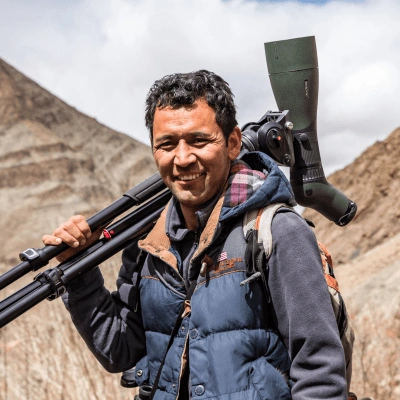
Originally from Chilling village by the Zanskar River, Khenrab Phuntsog joined the forest department as a Wildlife Guard in Hemis National Park almost 20 years ago. Today, he is widely regarded as one of India’s most experienced non-academic snow leopard experts.
- In these past 20 years he has done some amazing work that includes:
- Rescuing and supporting the rehabilitation of 47 snow leopards
- Reducing human-wildlife conflict by working directly with local herders on non-lethal livestock protection
- Sharing deep behavioural insights gained from years of tracking the “Ghosts of the Himalayas”
- Training trackers and advising low-impact expeditions for organisations like Voygr
- Collaborating with BBC’s Planet Earth II, National Geographic’s Hostile Planet, and biologist George Schaller
In recognition of his contributions, Khenrab has also received the Royal Bank of Scotland’s “Save the Species Award”. He now lives in Leh with his wife and two daughters, continuing his work while mentoring the next generation of conservationists.
Also read: Dr. Norbu Olthangpa: The surgeon who never took a single day of leave and built Ladakh’s healthcare
What sets Khenrab apart is his practical, community-rooted approach. He doesn’t just rescue animals, he builds understanding. By patiently explaining snow leopard behaviour to herders and demonstrating simple, effective protection methods, he helps turn potential conflict into coexistence.
How Snow leopard benifits the ecosystem
Snow leopards serve as apex predators in the trans-Himalayan ecosystem. By regulating populations of blue sheep and ibex, they prevent overgrazing, helping maintain healthy grasslands that support soil stability, plant life, and smaller species. This balance ultimately benefits the communities living in these fragile landscapes.
Despite progress in places like Hemis National Park, snow leopards still face climate change, habitat pressures, and occasional livestock conflicts. The SPAI report recommends a dedicated Snow Leopard Cell at WII and population monitoring every four years to track trends.
How you can be like Khenrab Phuntsog and contribute
Khenrab’s journey proves that you don’t need to be a scientist or celebrity to contribute meaningfully to conservation. Here’s how curious nature lovers and aspiring conservationists can follow in his footsteps:
- Start Local and Build Knowledge
Spend time in natural areas near you. Observe wildlife respectfully, learn from experienced locals, and understand the behaviour of species in your region — just as Khenrab did over decades in Ladakh. - Focus on Reducing Conflict
In areas with human-wildlife overlap, support or promote non-lethal solutions (such as better livestock pens or guard animals). Community trust is often more powerful than enforcement alone. - Gain Practical Skills
Volunteer with local wildlife organisations, join citizen science projects, or get trained in tracking, camera trapping, or basic rescue protocols. Field experience matters more than degrees in the early stages. - Work With Communities
Conservation succeeds when local people benefit. Like Khenrab, engage herders, villagers, and youth — listen to their concerns and find shared solutions rather than imposing top-down rules. - Support and Promote Responsible Efforts
Choose tourism operators that employ local conservationists, contribute to credible NGOs like WWF-India or Nature Conservation Foundation, and share accurate information based on official reports. - Commit Long-Term
Khenrab’s success came from nearly 20 years of steady work. Pick a cause you care about deeply and stay consistent — small, persistent actions add up. - Document and Share Responsibly
If you have skills in photography, writing, or filmmaking, use them ethically to highlight conservation stories without disturbing wildlife.